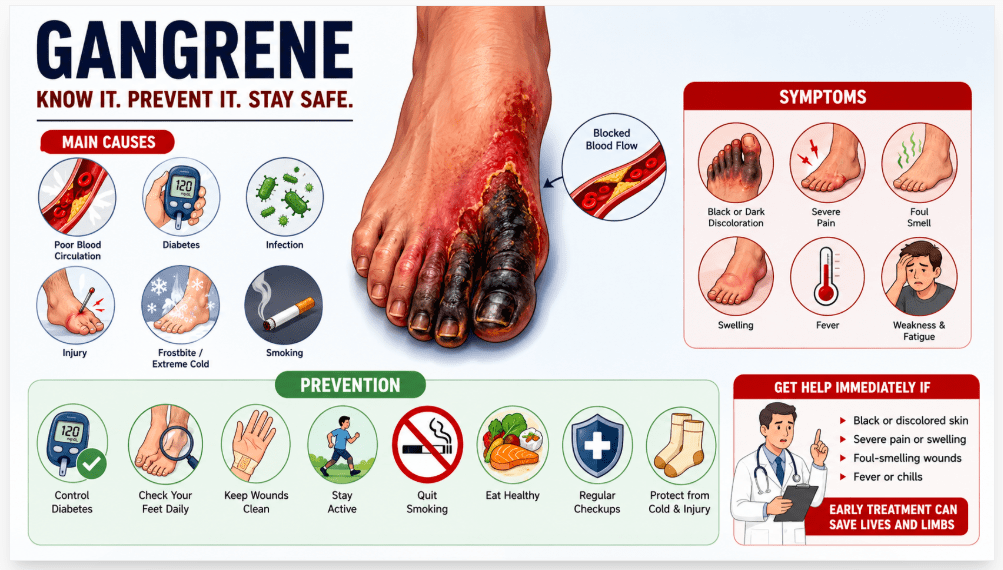
What Is Gangrene? What Is the Best Way to Avoid It?
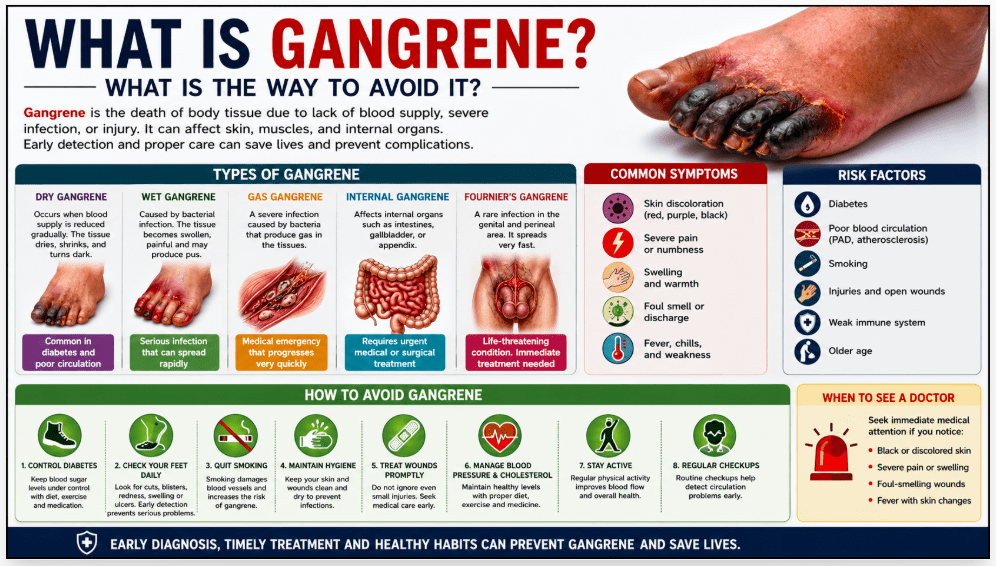
Introduction
Gangrene is a serious medical condition that occurs when body tissue dies due to a lack of blood supply, severe infection, or injury. Although many people have heard the term, few understand how dangerous gangrenous necrosis can be. If left untreated, gangrenous necrosis may spread rapidly, leading to severe complications, limb loss, or even death.
Understanding what gangrenous necrosis is, recognizing its symptoms, and learning how to prevent it can help protect your health and the health of your loved ones. This article explains everything you need to know about gangrenous necrosis, including its causes, symptoms, risk factors, treatment options, and effective prevention strategies.
What Is Gangrene?
Gangrene refers to the death of body tissues caused by insufficient blood flow or a serious bacterial infection. Blood carries oxygen and nutrients to tissues throughout the body. When the blood supply is interrupted, the affected tissue cannot survive and begins to die.
Gangrenous necrosis most commonly affects the feet, toes, legs, fingers, and hands. However, it can also develop in internal organs such as the intestines, gallbladder, and appendix.
Because gangrenous necrosis destroys living tissue, it is considered a medical emergency that requires immediate treatment.
How Does Gangrene Develop?
The human body depends on a healthy circulatory system to deliver oxygen-rich blood to every tissue. When blood vessels become blocked or damaged, tissues do not receive enough oxygen.
Without oxygen, cells begin to die. Dead tissue becomes vulnerable to infection, making gangrenous necrosis more likely to occur.
Several factors can contribute to the development of gangrenous necrosis, including:
- Diabetes
- Peripheral artery disease
- Severe burns
- Frostbite
- Traumatic injuries
- Blood vessel diseases
- Serious bacterial infections
- Smoking-related vascular damage
The risk of gangrene increases significantly when these conditions are not properly managed.
Why You Feel Weak in Hot Weather – The Hidden Science Behind It
Types of Gangrene
There are several different forms of gangrenous necrosis, each with unique characteristics.
1. Dry Gangrene
Dry gangrene develops when blood flow to a body part gradually decreases. The affected tissue dries out, shrinks, and changes color.
Symptoms of Dry gangrenous necrosis
- Dry and shriveled skin
- Brown, purple, or black discoloration
- Coldness in the affected area
- Numbness
- Slow progression
Dry gangrenous necrosis commonly occurs in people with diabetes and artery disease.
2. Wet Gangrene
Wet gangrenous necrosis occurs when dead tissue becomes infected by bacteria. This form is particularly dangerous because the infection can spread quickly through the bloodstream.
Symptoms of Wet gangrenous necrosis
- Swelling
- Blisters
- Severe pain
- Pus formation
- Foul-smelling discharge
- Fever
Wet gangrene requires urgent medical treatment.
3. Gas Gangrene
Gas gangrenous necrosis is caused by bacteria, usually Clostridium perfringens. These bacteria produce toxins and gas inside tissues.
Symptoms of Gas Dangrenous Necrosis
- Sudden severe pain
- Swelling
- Pale skin turning dark
- Gas bubbles under the skin
- Fever
- Rapid progression
Gas gangrenous necrosis can become life-threatening within hours.
4. Internal Gangrene
Internal gangrene affects organs inside the body, such as the intestines, gallbladder, or appendix.
Symptoms
- Severe abdominal pain
- Fever
- Nausea
- Vomiting
- General weakness
Internal gangrenous necrosis often requires emergency surgery.
5. Fournier’s Gangrene
Fournier’s gangrenous necrosis is a rare but severe infection affecting the genital and perineal area.
Risk Factors
- Diabetes
- Obesity
- Immune system disorders
- Alcohol abuse
This type of gangrene progresses rapidly and requires immediate medical attention.
Heat Wave Alert: 7 Dangerous Signs Your Body Is Overheating in Bangladesh’s Extreme Summer
Causes of Gangrene
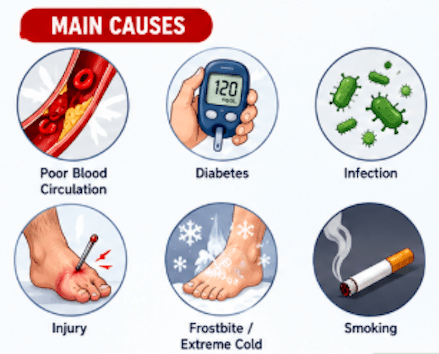
Several underlying conditions can cause gangrene.
Poor Blood Circulation
One of the most common causes of gangrenous necrosis is inadequate blood flow. Conditions that narrow or block blood vessels prevent tissues from receiving oxygen.
Examples include:
- Peripheral artery disease
- Atherosclerosis
- Blood clots
Diabetes
Diabetes is one of the leading risk factors for gangrene.
High blood sugar can:
- Damage nerves
- Reduce blood circulation
- Slow wound healing
- Increase infection risk
People with diabetes should be especially vigilant about preventing gangrenous necrosis.
Severe Infection
- Certain bacterial infections can rapidly destroy tissue and lead to gangrenous necrosis.
- Untreated infections may spread into deeper tissues, causing extensive damage.
Traumatic Injuries
Major injuries such as:
- Car accidents
- Crush injuries
- Deep cuts
- Gunshot wounds
can interrupt blood supply and increase the risk of gangrene.
Burns and Frostbite
- Extreme heat or cold can severely damage tissue.
- Both severe burns and frostbite may contribute to the development of gangrenous necrosis if circulation is compromised.
Symptoms of Gangrene
Early recognition of gangrenous necrosis can save lives.
Common symptoms include:
Skin Changes
- Redness
- Blue discoloration
- Purple coloration
- Black tissue
The color often depends on the stage and type of gangrene.
Pain
Initially, gangrenous necrosis may cause severe pain. As nerves die, the area may become numb.
Swelling
Infected forms of gangrenous necrosis often cause significant swelling and inflammation.
Foul Odor
A strong unpleasant smell is frequently associated with wet gangrenous necrosis.
Fever and Illness
Advanced gangrene may trigger:
- Fever
- Chills
- Low blood pressure
- Rapid heart rate
These signs may indicate a spreading infection.
Who Is Most at Risk?
Certain groups face a higher risk of developing gangrenous necrosis.
People with Diabetes
Diabetes-related foot ulcers frequently contribute to gangrene.
Smokers
Smoking damages blood vessels and reduces circulation.
Elderly Individuals
Age-related circulation problems increase vulnerability.
People with Peripheral Artery Disease
Blocked arteries significantly raise the risk of gangrenous necrosis.
Individuals with Weakened Immune Systems
Cancer treatment, HIV infection, and immunosuppressive medications may increase susceptibility.
High Blood Sugar Symptoms: 10 Early Signs of Diabetes Risk
How Is Gangrene Diagnosed?
Doctors use several methods to diagnose gangrenous necrosis.
Physical Examination
Visible signs often provide important clues.
Blood Tests
Blood tests help identify infection and inflammation.
Imaging Studies
Doctors may use:
- X-rays
- CT scans
- MRI scans
to assess tissue damage.
Tissue Culture
Samples can identify the bacteria causing gangrene.
Treatment of Gangrene
Treatment aims to stop the spread of gangrenous necrosis, eliminate infection, and restore blood flow when possible.
Antibiotics
- Severe infections require powerful intravenous antibiotics.
- Antibiotics are especially important in wet gangrenous necrosis and gas gangrenous necrosis.
Surgery
- Dead tissue must often be removed.
- This procedure is called debridement.
- Removing dead tissue helps prevent the spread of gangrenous necrosis.
Vascular Surgery
Doctors may perform procedures to improve circulation, such as:
- Angioplasty
- Bypass surgery
Restoring blood flow can help prevent further tissue death.
Hyperbaric Oxygen Therapy
This treatment exposes patients to high-pressure oxygen.
In some cases, it helps fight infection and supports healing in gangrenous necrosis patients.
Amputation
- When tissue damage is extensive, amputation may be necessary.
- Although this sounds frightening, amputation can save a person’s life by preventing the spread of gangrene.
Silent Killer in Your Daily Life: 7 vitamin D deficiency symptoms
What Is the Best Way to Avoid Gangrene?
Preventing gangrene is far easier than treating it.
Here are the most effective prevention methods.
1. Control Diabetes Properly
Maintaining healthy blood sugar levels significantly reduces the risk of gangrenous necrosis.
Important steps include:
- Monitoring blood glucose regularly
- Taking prescribed medications
- Following a healthy diet
- Exercising regularly
2. Inspect Your Feet Daily
People with diabetes should examine their feet every day.
Look for:
- Cuts
- Blisters
- Redness
- Swelling
- Ulcers
Early detection can prevent gangrenous necrosis from developing.
3. Stop Smoking
- Smoking damages blood vessels and decreases oxygen delivery.
- Quitting smoking is one of the most effective ways to reduce the risk of gangrene.
4. Maintain Good Hygiene
- Keeping wounds clean helps prevent infection.
- Wash cuts and scrapes promptly and apply appropriate dressings.
- Good hygiene lowers the likelihood of infection-related gangrenous necrosis.
5. Seek Immediate Treatment for Wounds
- Even small injuries should not be ignored.
- Prompt treatment reduces the risk of infection and tissue death.
6. Manage Blood Pressure and Cholesterol
Healthy blood vessels are essential for preventing gangrene.
Control cardiovascular risk factors by:
- Eating a balanced diet
- Exercising regularly
- Taking prescribed medications
7. Protect Yourself from Extreme Temperatures
- Wear appropriate clothing during cold weather to avoid frostbite.
- Use protective equipment when working with heat sources.
8. Stay Physically Active
- Exercise improves circulation and supports vascular health.
- Better circulation reduces the risk of gangrenous necrosis.
9. Attend Regular Health Checkups
- Routine medical evaluations can detect circulation problems before they become severe.
- Early intervention helps prevent gangrene.
Benefits of Honey: 13 Science-Backed Reasons to Use Nature’s Golden Superfood
When Should You See a Doctor?
Seek immediate medical attention if you notice:
- Black or discolored skin
- Persistent foot ulcers
- Severe swelling
- Sudden pain
- Foul-smelling wounds
- Fever with skin changes
Quick treatment can prevent complications from gangrenous necrosis and may save affected limbs.
Conclusion
Gangrene is a dangerous condition that occurs when body tissue dies because of poor blood supply, infection, or severe injury. Although gangrenous necrosis can affect anyone, people with diabetes, vascular disease, and smoking-related circulation problems face the greatest risk.
Recognizing the early signs of gangrenous necrosis, including discoloration, swelling, pain, and foul-smelling wounds, is critical for timely treatment. Modern medical care can successfully manage many cases of gangrene, but prevention remains the best approach.
By controlling diabetes, maintaining healthy circulation, quitting smoking, practicing proper wound care, and seeking prompt medical attention for infections and injuries, you can dramatically reduce your chances of developing gangrene.
Protecting your blood vessels and taking care of even minor wounds today can help ensure that gangrenous necrosis never becomes a serious threat to your health tomorrow.
Instagram Twitter Facebook LinkedIn Quora Google News
Our Other Engagements:


